OBD2 Codes LookupDecode Every Check Engine Light Code
See a check engine light? Look up obd2 codes in seconds. Plug in an obd2 scanner, read the automotive diagnostic trouble code, and look it up here — what it means, how serious it is, the most likely causes, real repair costs, and whether you can fix it yourself. Free, in plain English, no signup.
How OBD2 Codes Work
OBD2 (On-Board Diagnostics II) is the standardized self-diagnosis system built into every car and light truck sold since 1996. It watches engine and emissions sensors around the clock, and when it finds a problem it stores a diagnostic trouble code and turns on your check engine light. Here is the whole process in three steps.
Your car watches itself
The engine control unit (ECU) — your car’s computer — monitors dozens of obd2 sensors around the clock: fuel mixture, airflow, RPM, coolant temperature, and emissions output.
A fault becomes a code
When a reading drifts outside its normal window, the ECU stores a five-character dtc code and lights up the check engine light on your dash.
You read it with a scanner
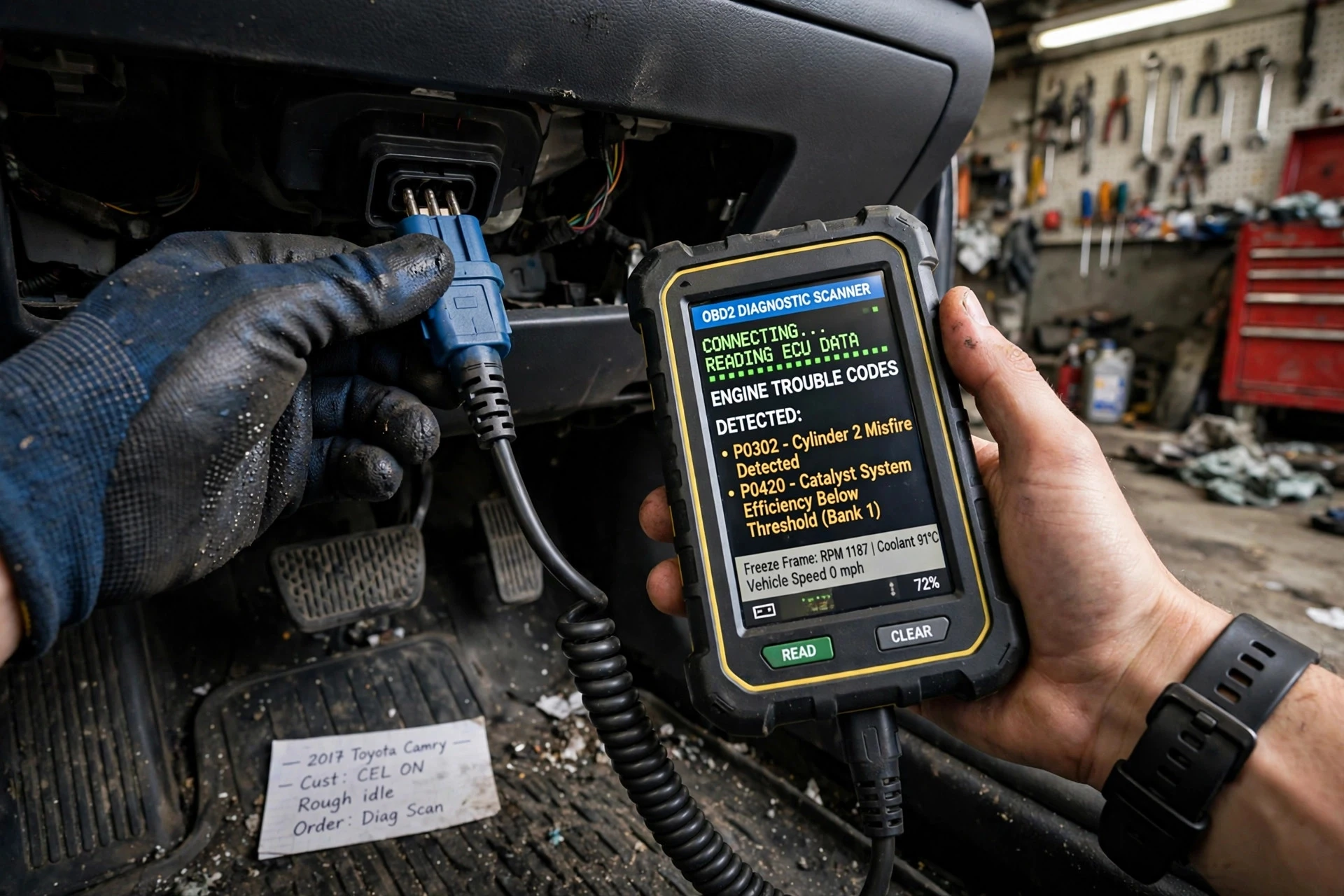
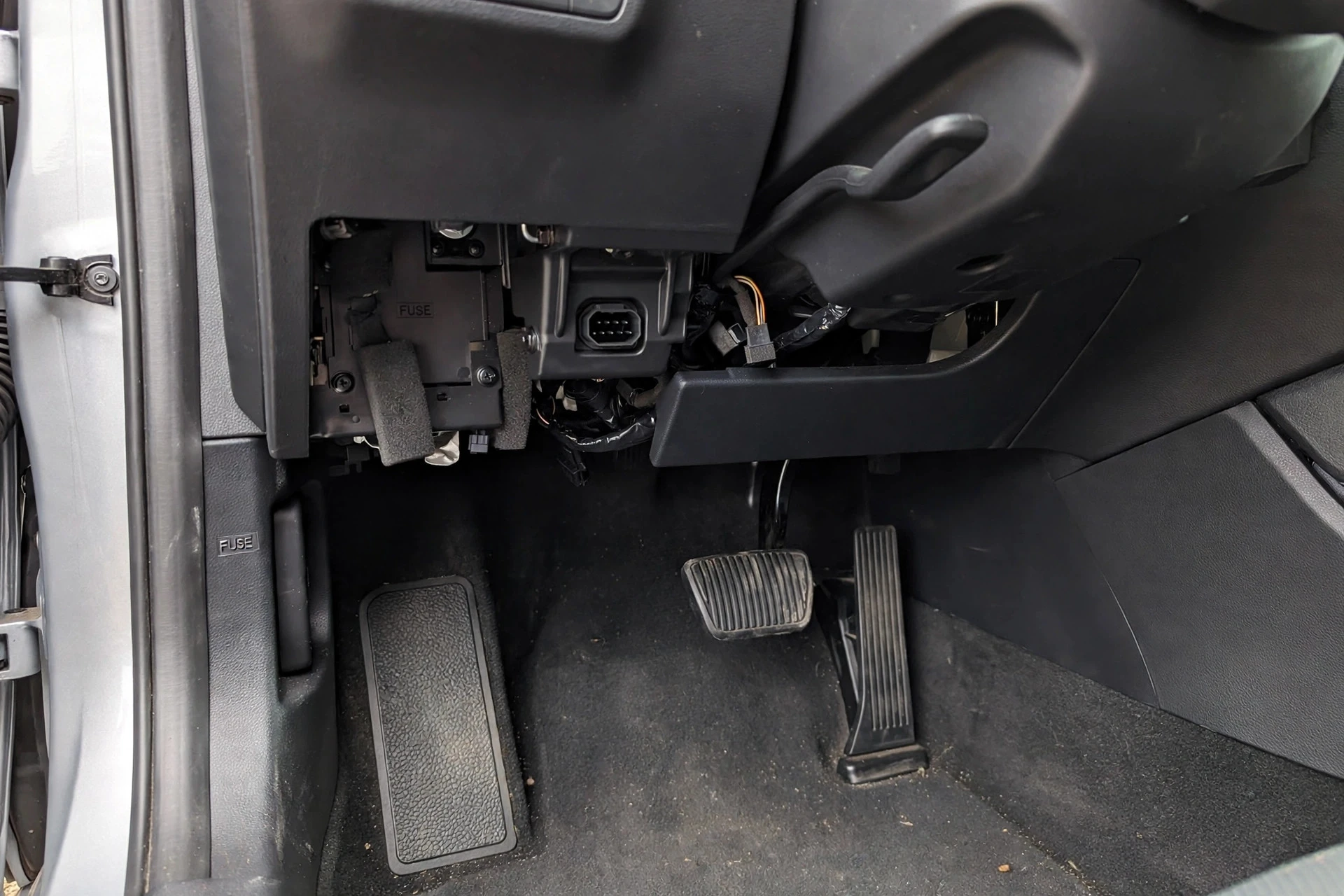
Plug any obd2 code reader into the 16-pin obd2 connector under the driver’s-side dash, pull the engine codes, and look them up here in plain English — no mechanic visit required just to learn what your car is telling you.
Browse OBD2 Codes by System
Every obd2 code belongs to a vehicle system. Pick a system to narrow down where your fault lives.
Fuel & Air
Fuel delivery and air-metering faults, like lean or rich mixture codes.
Misfire & Ignition
Misfire and ignition faults, from single-cylinder to random misfires.
Emissions
Catalytic converter, oxygen sensor, and EVAP system codes.
Idle & Speed
Idle-control and vehicle speed sensor codes.
Computer / ECM
Internal computer faults and communication-circuit codes.
Transmission
Gearbox, shift-control, and torque-converter codes.
Diesel & DPF
Diesel particulate filter and diesel-emissions codes.
Popular OBD2 Codes
Start with the codes drivers search most — each code gets a full guide: symptoms, ranked causes, diagnostic steps, real costs, DIY-vs-mechanic verdict, and related obd2 trouble codes. Or jump straight to the full code list.
What does the check engine light mean? OBD2 codes explained
An obd2 code — formally an automotive diagnostic trouble code (DTC) — is a five-character alphanumeric fault record your car’s computer stores the moment it detects something wrong. Every car sold since 1996 speaks this language: when a sensor reading drifts out of range, the computer logs one of these diagnostic trouble codes and switches on the check engine light. The code doesn’t just say “something broke” — its very structure tells you which system failed, whether the fault is generic or brand-specific, and exactly which part of that system to investigate. Below, you’ll learn to decode any engine code yourself in about two minutes — then look it up in our free tool for causes, severity, and costs.
How to read a 5-character OBD2 code
Every dtc follows the same anatomy. Take P0300 (random/multiple cylinder misfire) as the walkthrough:
- P — the first letter names the system: P = powertrain (engine & transmission), B = body, C = chassis, U = network.
- 0 — the second digit separates generic codes (0, same on every brand — these are SAE-standard dtc codes) from manufacturer-specific codes (1, e.g. entries you’d find on a gm engine codes list).
- 3 — the third digit narrows the subsystem: 1 = fuel & air metering, 3 = ignition/misfire, 4 = auxiliary emissions, 5 = idle & speed, 6 = computer, 7 = transmission.
- 00 — the last two digits name the exact fault within that subsystem.
Learn this pattern once and no engine trouble codes ever look random again.
Ready to look up your code?
Type it into the quick lookup above, or browse the full library — every code explained in plain English, free.
Look Up a Code →The 16-pin connector & pin layout
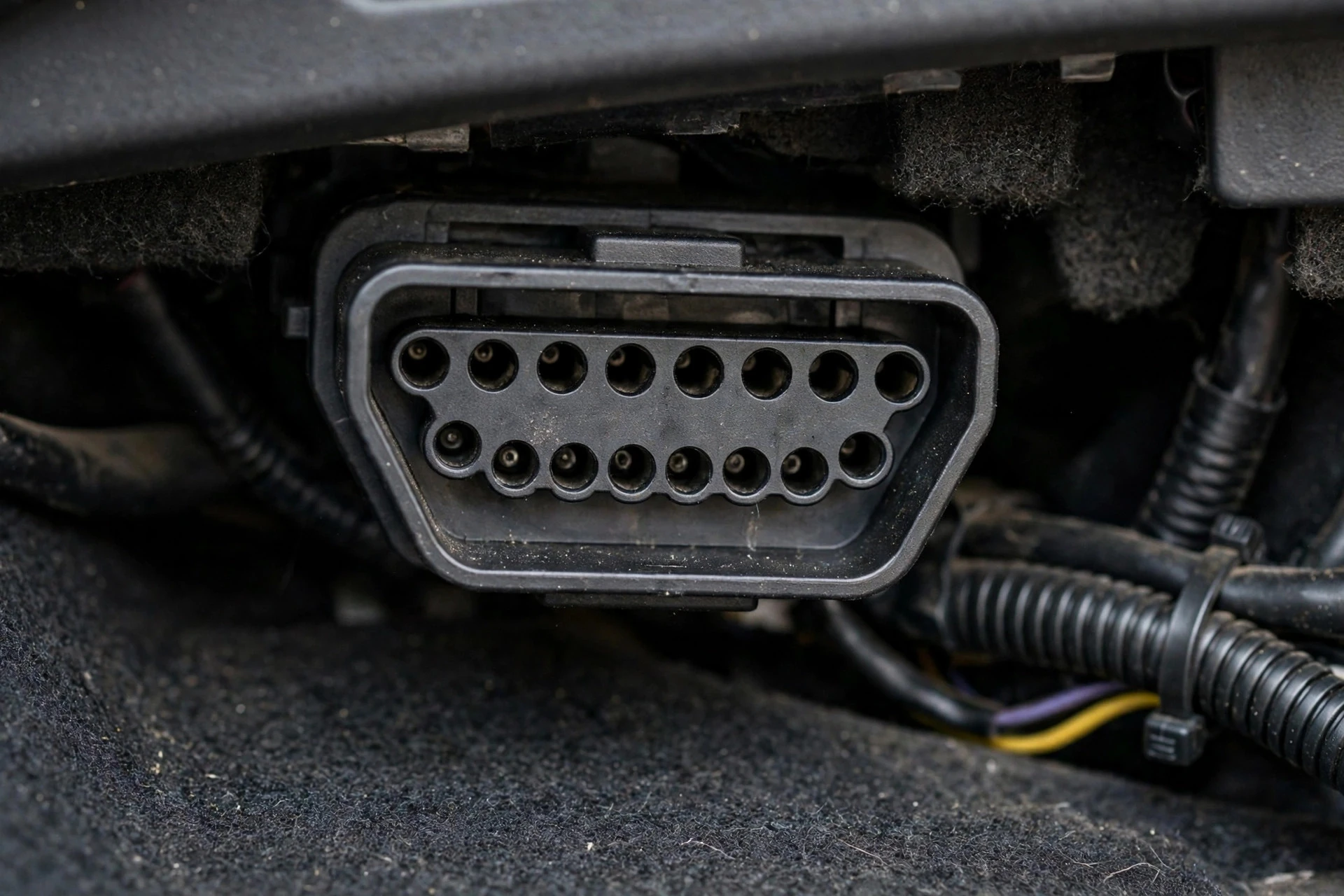
Every 1996+ vehicle has the same trapezoid-shaped obd2 connector, usually under the dash near the steering column. The standardized obd2 pin layout carries power, ground, and the communication lines your obd2 tool talks on — which is why one elm327 obd2 bluetooth adapter can work on a Ford, a Toyota, and a BMW alike. Push the plug in until it clicks, then turn the ignition to ON (engine OFF) before scanning.
Which OBD2 scanner do you need?
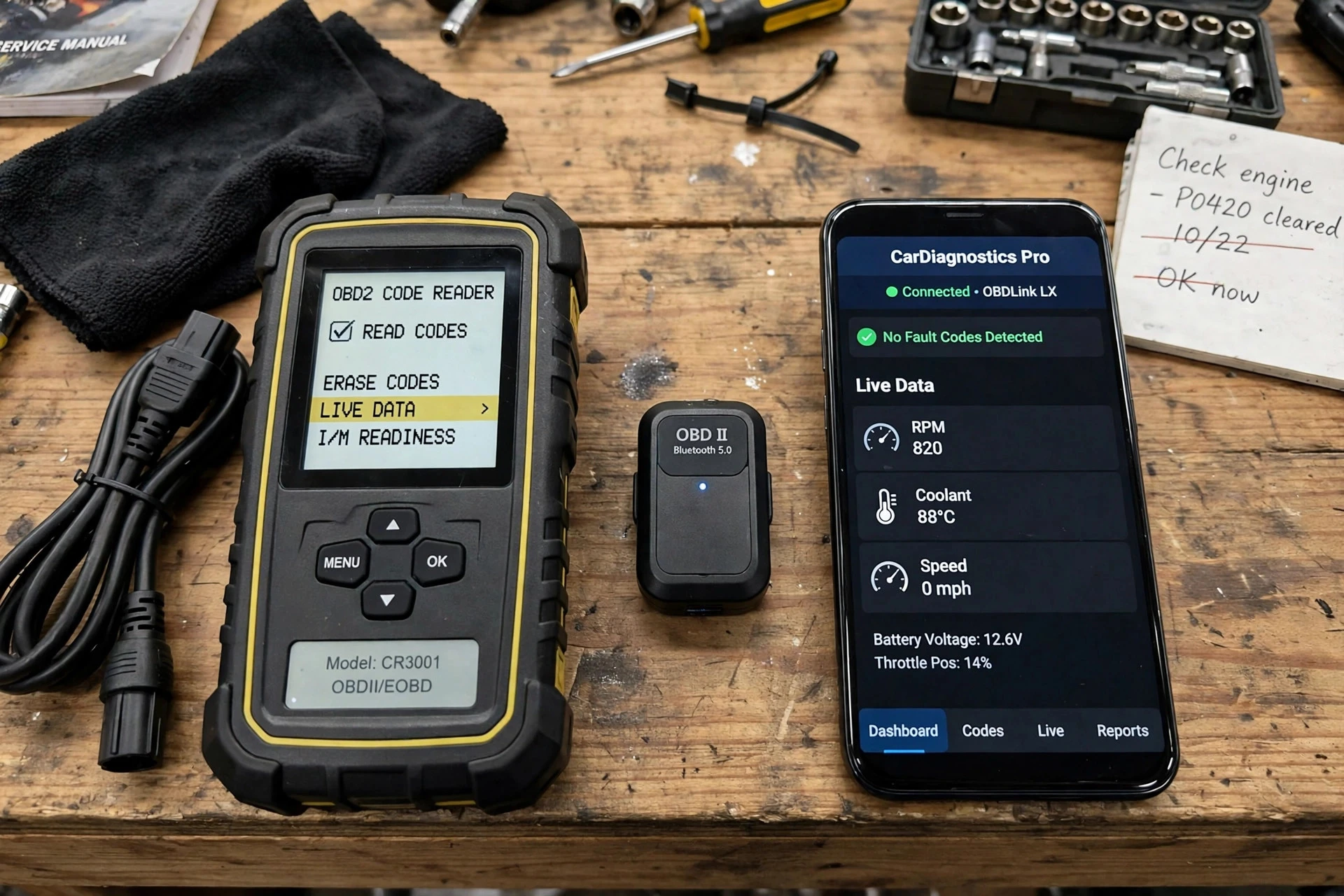
Not every obd2 scanner does the same job. Match the tool to your ambition:
- Basic code readers ($20–$50): read and clear check engine light codes, show code definitions. Enough for 9 out of 10 drivers.
- Bluetooth obd2 scanner + phone app ($15–$40 for an elm327 obd2 adapter, app often free): the enthusiast pick. A bluetooth obd2 scanner turns your phone into an obd2 monitor with live sensor graphs, an obd2 gauge display (RPM, coolant temp, fuel trims), and trip logging.
- Mid-range scanners ($100–$200): add ABS and airbag (SRS) coverage plus I/M readiness monitors for emissions tests.
- Bidirectional pro tools ($300+): can command parts — cycle the fuel pump, bleed ABS brakes, run EVAP tests. Shop-grade territory.
Our take: start with a bluetooth adapter and a free app. It reads every generic automotive diagnostic trouble code, costs less than a tank of gas, and teaches you more about your car in a weekend than years of guessing.
The check engine light came on — now what?

- Don’t panic. A steady check engine light is your car asking for attention, not declaring an emergency.
- Check the obvious first: a loose gas cap alone triggers EVAP leak dtcs like P0456/P0442 — tighten it until it clicks and drive a few days.
- Read the code with any obd2 code reader — auto parts stores do it free if you don’t own one.
- Judge severity: steady light = diagnose soon; FLASHING light = severe misfire — stop driving, it can destroy the catalytic converter in minutes.
- Look the code up here before visiting a shop — knowing your dtcs turns you from a captive customer into an informed one, and protects you from unnecessary upsells.
Clearing codes: fix first, clear second
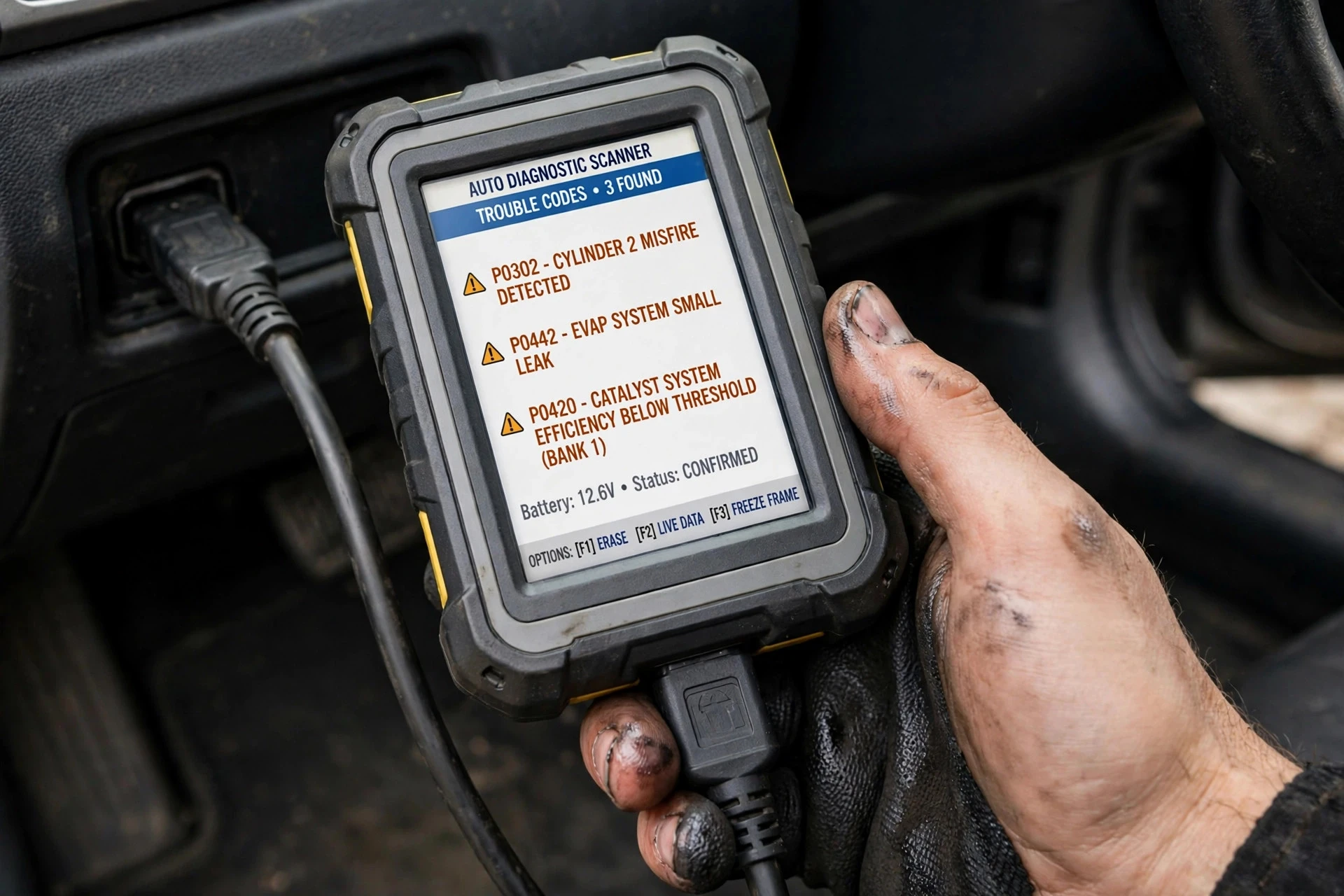
Every obd2 tool can erase codes — but erasing without repairing just turns the light off until the fault returns. The professional sequence: diagnose → repair → clear → drive → confirm the code stays gone. Clearing is also how you verify a repair worked and how shops check I/M readiness before an emissions test.
Generic vs manufacturer-specific codes
Codes starting with P0 (like P0420) are generic — identical on every brand. Codes starting with P1 are manufacturer-specific: a P1xxx on a Chevy can mean something different than the same number on a Honda, which is why model-specific references like a gm engine codes list exist. Our code guides always flag when a code has brand-specific variants, and our free obd2 codes list pdf (coming with the full code index) marks every generic code clearly.
Built for drivers, not garages
Plain English, always
No jargon, no shop-speak — every definition and fix is written so any driver can follow it.
Real search demand
We cover the codes drivers actually search for — the 100+ trouble codes with real monthly volume.
Safe repair guidance
Every page flags what you can check yourself and what needs a pro — plus honest repair cost ranges.
Free forever
No signup, no paywall — look up as many codes as you need, as often as you need.
Common questions
What is an OBD-II trouble code?
How do I read my check engine light codes?
What does a flashing check engine light mean?
Can an obd2 scanner turn the check engine light off?
Is it worth buying an OBD2 scanner?
Do I need a mechanic for every code?
Does the code tell me exactly which part to replace?
Your check engine light, decoded
Your check engine light doesn’t have to be a mystery — or an expensive guessing game. Every OBD-II code is your car telling you exactly what’s wrong, in a language you can now read yourself: the system, the fault type, and the exact problem, all in five characters. Whether you grab a $20 code reader or a bluetooth adapter with live data, you can pull your own check engine light codes, understand the likel